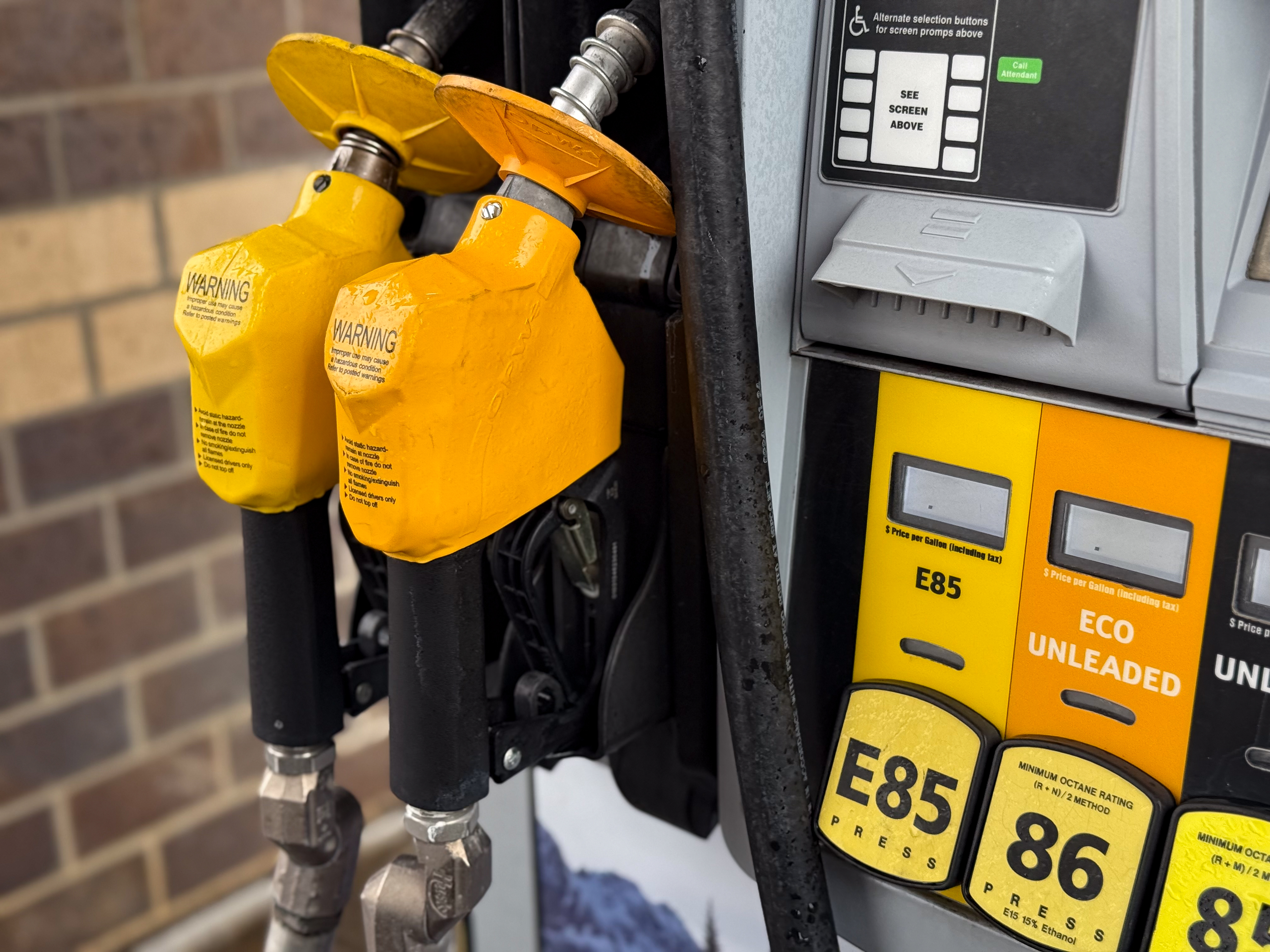
Ohio drivers paying more than $4.50 a gallon for gas and record diesel prices could see relief at the pump within weeks if Republican lawmakers pass a 90-day suspension of the state's gas and diesel taxes.
House Speaker Matt Huffman and Senate President Rob McColley announced Sept. 23 that the legislature will vote Wednesday, Sept. 30, on a plan to freeze Ohio's 38.5-cent-per-gallon gas tax and 47-cent-per-gallon diesel tax. The proposal, championed by Republican gubernatorial candidate Vivek Ramaswamy, would save Ohio drivers an estimated $678 million over three months, Signal Cincinnati first reported.
Regular unleaded gasoline averaged $4.52 statewide as of Monday, Sept. 21, according to AAA data cited by Cleveland.com. Diesel hit a record $6.77 per gallon, surpassing the previous high of $5.95 set in June 2022. Overseas conflicts and regional refinery problems have driven the increases, Cleveland.com reported.
For a family filling a 15-gallon tank once a week, the current state gas tax alone costs about $300 a year, according to WTAP.
What it means locally
Anderson Township's 2024 budget shows motor vehicle, gas excise and permissive taxes account for about 3% of total township revenue. The township maintains more than 123 miles of subdivision streets, while Hamilton County handles 73 miles of through-roads such as Clough, Salem and Eight Mile, according to the township's road guide.
Anderson Township's Road and Bridge levy, adopted in 1998, funds current road services. New paving projects are paid for with TIF funds, according to the budget document. The exact dollar amount of gas tax revenue flowing to Anderson Township is not broken out in available records.
Statewide, about 38% of Ohio's motor fuel tax revenue supports local government transportation projects. Ohio collected nearly $2.6 billion in motor fuel taxes in fiscal year 2025, Cleveland.com reported.
The political math
The plan would tap ODOT's ending cash balance to replace lost road revenue, followed by the General Revenue Fund and, if needed, the state's Rainy Day Fund, according to WTAP.
Without Democratic votes, the suspension cannot take effect immediately. Standard legislative rules require a larger margin for new laws to take effect right away. Without that support, the tax cut would not kick in until late December.
"I think Democrats who vote against this are doing it at their peril," Huffman said at a Sept. 23 news conference in Columbus. "This is a very easily understood issue."
House Minority Leader Dani Isaacsohn called the proposal a political ploy at the same news conference. He said Democrats would back a gas relief measure only if it redirects the $600 million lawmakers already set aside for a new Cleveland Browns stadium.
Gov. Mike DeWine has not committed to signing or vetoing the bill. DeWine pushed for a gas tax increase in 2019 and has raised concerns about long-term road funding. He said Sept. 22 that he had asked ODOT to provide data, according to Statehouse News Bureau.
A similar effort in March 2026, prompted by the U.S. and Israel bombing of Iran, failed to advance. Lawmakers went home in June expecting not to return until after the election.
What's next
The Sept. 30 vote is the next milestone. Huffman said he hopes DeWine will sign the bill as soon as early October. Early voting begins Oct. 6. The House version is being carried by Rep. Andrea White and Rep. Jim Thomas, both suburban Republicans. No Anderson Township trustees or Mariemont council members have publicly commented on the proposal's local impact.